shaneycrawford dotcom

Unit Plan: Teaching Cultural Features of a Language

This post is from a course that I took. I had to make blog posts for the course and I decided to move the posts over here when the course finished.


Here is my idea for how to teach a cultural feature of Japanese using some of the resources I chose.


Teaching Cultural Awareness Through the Issue of Whaling


Target Language: Japanese

Level: Stage 5 Extension (Japanese Continuers or Japanese Extension)

Length: This unit is expected to last about 7 lessons (e.g. 5 x 50 minute periods) in approximately the following formation.

Lesson 1 – Part 1, Part 2, Part 3a
Lesson 2 – Part 3b, 3c, 3d
Lesson 3 – Part 4, Part 5
Lesson 4 – Part 5 (continued)
Lesson 5 – Part 6
Lesson 6 – Part 7
Lesson 7 – Part 8

Content:
The grammar point for this unit is ๏ฝžใจๆ€ใ„ใพใ™ (I think…). Students will learn how to express their opinions using this structure.

The cultural feature that I am focusing on in this unit is expressing an opinion. In Japan, it is important to express your opinions softly, pay attention to your audience and the context of your conversation, and to try to maintain harmony with your interlocutors.


Part 1: Provocation (Orientation)

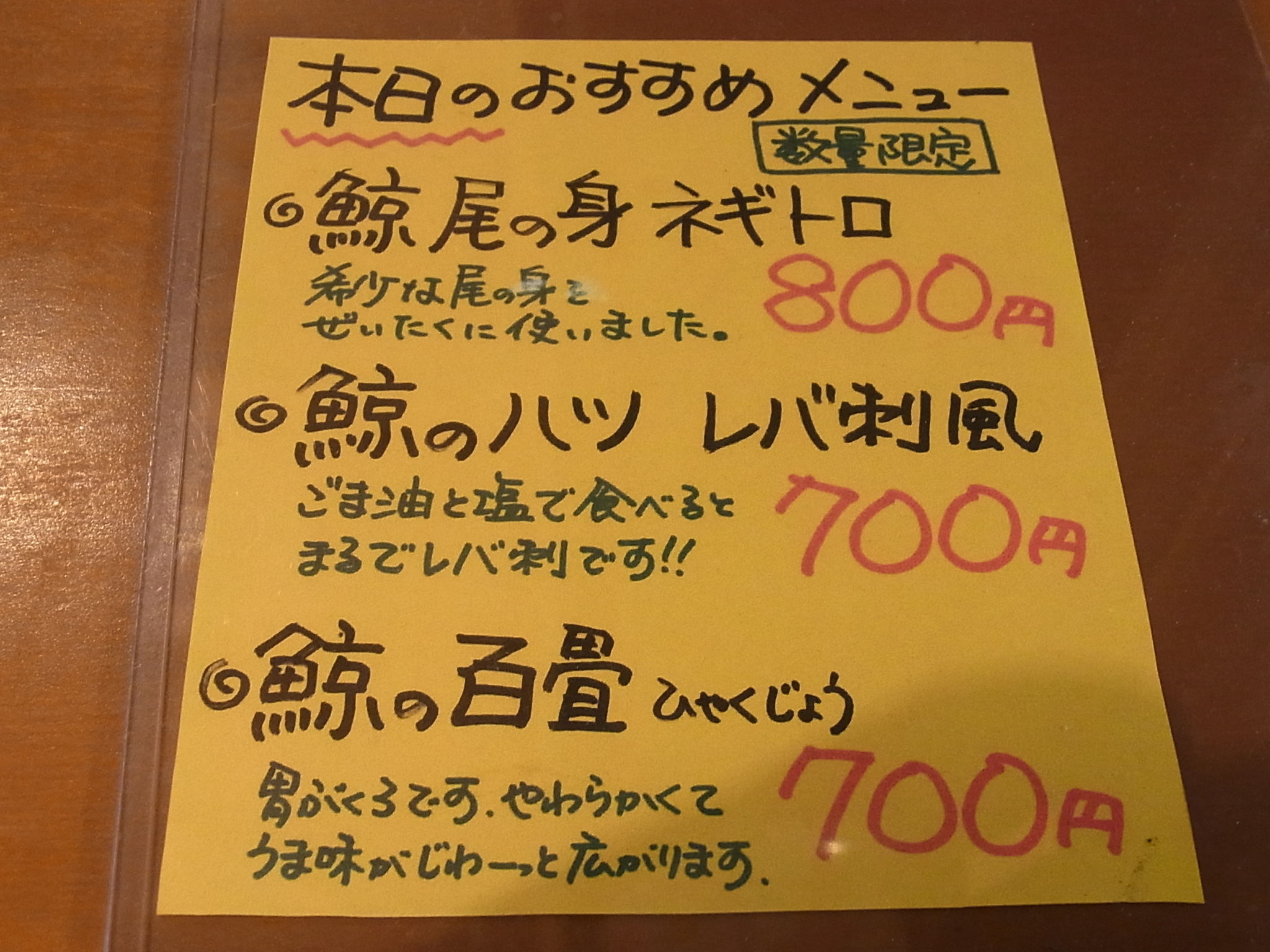
I will use this photograph of a menu (in Japanese) as a provocation.

I will ask the students to try to translate some of the words on the menu using their dictionaries (kanji dictionaries and regular dictionaries, online and hard copy). Eventually, some of the students will realize that the character ้ฏจ means whale.

(If students struggle to find the character in their dictionaries, we will do review work on dictionary use here.)

I will then show students a video (in English) that briefly explains the controversy about whaling from both sides.

http://www.youtube.com/watch?v=7t5wHTGbQEY


Part 2: Reflect on Current Opinions (Orientation)

I will ask students to reflect on their opinions about whaling (the hunting and killing of whales for food). I will ask them to write a short paragraph (in English) about their stance on whaling. (Some students may have no particular opinion about it, so I will ask them to write about what they think they know about whaling.)


Part 3: Deepening Understanding (Presentation)

RELEVANT OUTCOME: Moving Between Cultures
5.MBC.4 Evaluates expressions and representations of the culture of Japanese-speaking communities in a range of texts.

a. Through Visual Stimuli
We will then discuss (in English) the menu and the different ways that whale is being served in the restaurant where the menu is from.

I will show them pictures like this to help them visualize what it would be like to eat whale meat.

b. Through Reading (in English) and Discussion

RELEVANT OUTCOME: Using Language: Reading and Responding
5.UL.5: Selects, summarizes and evaluates information and ideas in written texts and responds appropriately in a range of text types

I will use this English article to open up discussion on Japanโ€™s insistence on its right to continue whaling.

c. Through Reading (in Japanese) and Discussion

Students will be given a text in Japanese about whaling to try to decipher (with help from me and some dictionaries). Page 5 of the following pamphlet has an explanation of how whales eat 5 times as many fish as human do, and are therefore considered in competition with humans for food.

d. Through Reading an Opposing Viewpoint (in English) and Discussion

The following is a speech that was given by a Japanese junior high school student about whales and dolphins. I will include a reference to this speech to show that we must not make generalizations and assume that all Japanese people are in favour of whaling.


Part 4: Vocabulary Enrichment (Presentation)

RELEVANT OUTCOME: Using Language: Speaking
5.UL.7 Uses Japanese with flexibility by incorporating new structures and features for effective communication

I will have the students work in groups to use the above articles and their own imaginations to come up with at least 5 words that they would need to have a short conversation about whaling with a Japanese person. They can come up with the words in English and then use their dictionaries to translate the words into Japanese or they can choose words that they learned from the Japanese article. They will make a collective vocabulary list that they will be able to use as a reference during the capping project (part 7).


Part 5: Explicit Teaching of Culture (Presentation)

RELEVANT OUTCOME: Making Linguistic Connections
5.MLC.4 Analyses ways in which the structures and features of spoken and written Japanese can be manipulated for particular effect

We will then have lessons about expressing opinions in Japanese. We will cover both the grammatical point of how to use ๏ฝžใจๆ€ใ„ใพใ™ (I think…) and the cultural aspects of preserving harmony in conversations.

These articles compare how opinions are expressed in English and Japanese.

Page 24 of this booklet (page 26 of the PDF) talks about some of the cultural features involved in expressing opinions in Japanese.


Part 6: Playing with Culture (Application)

RELEVANT OUTCOME: Moving Between Cultures
5.MBC.3 Evaluates the importance of being able to move between cultures

I would like students to play with the idea of using aizuchi (back-channel feedback, listening sounds) and body language to preserve harmony with someone who is saying things that they disagree with.

First, I will teach students some aizuchi words and sounds like ใใ†ใงใ™ใ‹ (soo desu ka — is that right?) and ใธใƒผใƒผใƒผ (heeeee — used to express a variety of emotions including surprise and disbelieve.)

This video is directed at Japanese learners of English, but it explains the difference between aizuchi in English and Japanese. I will use it to explain what aizuchi sounds like in Japanese and how there can be some cross-cultural misunderstandings with the use of aizuchi in different cultures.

I will then put students in pairs and give them topics to discuss. In Round 1, the student who is leading the conversation (Student A) will be given the topic and expected to express an opinion on it (in English). The listener (Student B) will then respond with (Japanese) aizuchi and body language in a way that preserves harmony with their interlocuter. The students will then switch roles. In Round 2, Student A will be given a controversial topic and be asked to express an opinion about the topic that they think the listener will probably want to disagree with (e.g. saying that they support the death penalty because there are too many people anyway, so it’s better to kill some of them). Student B will then respond with Japanese aizuchi and body language in a way that preserves harmony with their interlocuter, despite the fact that the listener does not agree with what is being said.


Part 7: Capping Project (Application)

RELEVANT OUTCOME: Using Language: Writing
5.UL.8 Presents a point of view using accurate grammar and experimenting with linguistic structures and features in a range of text types

Students will then be asked to develop a (simple but) culturally sensitive argument for or against whaling. (They can choose which side to argue.) They will be encouraged to use a โ€œthird placeโ€ mentality (โ€œa position between the two cultures from which one can interact comfortably with people from the other culture while maintaining oneโ€™s own identityโ€ — ALPLA 2010, Getting Started with Intercultural Language Learning) while elaborating their position. Their argument will be presented as a one-paragraph “position statement” with an introduction, one or two short points of argument, and a conclusion. Students will also be required to try to express either one of their points of argument or their conclusion orally in a Japanese sentence that will be presented to the class.

I will use the following resource as a teacher reference to remind me of the kinds of arguments that are often given in whaling debates. I am interested to see if the students come up with any/all of them.


Part 8: Reflection (Enhancement)

In the end, I will ask students to look back at the opinion they had of whaling at the beginning of this unit (from Part 2) and see if they have changed their thinking in any way since then.


Here are my responses to feedback that I received on this unit plan.

I would love to get your feedback on my picopause articles in this very short survey.

If you enjoyed this article and would like to get updates from shaneycrawford dotcom sent to your inbox, click here to subscribe. It’s free!

Comments

8 responses to “Unit Plan: Teaching Cultural Features of a Language”

  1. [Mei]

    Great idea to teach this particular grammar point โ€ฆใจๆ€ใ„ใพใ™ while linking it with introducing ways of expressing opinions in Japanese language/culture. I really like the article about the different ways of expressing opinions in Japanese and English. I think students would be really surprised when they discover that difference.

    Now my question is that what year level is/are the lesson/lessons planned for? How many lessons will you use for this topic?

    To me, the Whaling issue is quite a complicated issue and it is quite important that students do not develop a stereotyped image of Japanese people walking into a restaurant and eating whale in Japan. So it is good that you also are aware of that by providing students with the article written by the Japanese student about whaling.

    If you have one lesson planed for this topic, would you have enough time to go through all the reading/discussion resources plus time to focus on explaining and practicing the targeted grammar point ใจๆ€ใ„ใพใ™ใ€‚

  2. C

    Firstly, I have to say I was really impressed with all the resources you’ve gathered for the purpose of this feature of culture.

    I think the debate about whaling is very interesting and will most likely get all students involved and start a debate.

    The way you have sequenced the activities appears really successful to me because you are slowly building for them to make an informed opinion about the topic.

    As I said to [Mei], I find it difficult to comment in depth on the language part of your idea since I cannot speak Japanese. I have a question about your dictionary activity though; you say that eventually, ‘some’ students will work how the symbol for whale. How come not all students are expected to work it out?

    What Year/Stage are you aiming these activities at? Surely, this will take longer than a single lesson. Have you thought about how many lessons you would devote to the teaching of this topic?

    As I previously mentioned, I think your activities link really well together and the sequence is really smooth. I can see why you would ask students to write the one-page essay in English (and as Crozet and Liddicoat (1999b) mention in Reading 8, ‘learners’ other language(s), (first or second) need to be allowed into the language classroom’), but have you thought about asking them to try and write a shorter essay in Japanese, maybe in groups (one for and one against whaling for example) or would that be too difficult?

    This idea sounds great, I would love to see the final product in the classroom!

  3. Ginie

    This is a very complete sequence on opinions and whaling isn’t it? It must of taken hours to find all the articles and pictures you wanted! Unfortunately I don’t know enough about teaching Japanese to give you any useful feedback on your approach of the grammar points but you are setting the topic up gradually and clearly so that students can follow. What level would these students be?

    This is an interesting topic. I was once teaching ESL to a group of 5 Japanese business people (here in Sydney) and they were really keen on talking about whaling. They felt misunderstood and offended that other countries might try to have a say in ‘their culture’. They were also astonished to find out that Japan was not the only country with a history of whaling, that others including Australia used to but had stopped. (I was amazed to find out in your documents that Japan didn’t start whaling till after WWII!) Our spur of the moment chat would have been better with some background info.

    I noticed it ends with an essay in English, how do you feel about the final product not being in Japanese (of course this is probably linked to their level) even if simpler?

    I hope my questions aren’t too ridiculous and that you can use them for discussion in your assignment. :)

  4. Shaney

    Hi [Mei],

    Thank you for your comments. I consider this to be a unit, or series of lessons, rather than just one lesson. I would plan to teach this over approximately 5 lessons/periods. I have updated my plans above to show how I would space out the parts.

  5. Shaney

    Hi [C],

    Thank you for your comments.

    I consider this to be a unit, or series of lessons, rather than just one lesson. I would plan to teach this over approximately 5 lessons/periods. I have updated my plans above to show how I would space out the parts.

    Regarding the dictionary activity, I should explain that learning to use a Japanese dictionary is a non-trivial task! It is not just a case of opening up the dictionary and being able to navigate to the word you want to find. When a word is written in kanji such as ้ฏจ, you have to know quite a few things about it in order to be able to look it up. (If you think it seems ridiculous to suggest that you should already know things about words you are looking up, you are correct!) Different learner dictionaries have different index systems, and you have to teach yourself how to use the dictionary first before you can jump in and look up a word. In the case of a “normal” kanji dictionary, you would generally have to know the radical (the base part of the kanji character), the number of strokes in the radical, and the total number of strokes in the whole character. Digital dictionaries make things a bit easier, but even they can still be challenging to use. If you have never written the character ้ฏจ before, you might find it a bit tricky to write it on a computer screen with a stylus in a way that a computer would be able to recognize! This means that some students will be able to use kanji dictionaries more quickly than others. I will try to give students as much time as possible to find the character, but it is quite likely that some of them will not be able to find it.

    Revision to plans: If students struggle to find the character in their dictionaries, we will do review work on dictionary use here.

    Your second suggestion is to have the students attempt to write a short expository text on their views on whaling. I have not taught in Australia before, and I have not taught Japanese to high school students, but my impression is that even at the Stage 5 extension level, writing an essay — even a short one — in Japanese might be too big an ask. The writing system, which consists of two syllabaries (hiragana, katakana) and the kanji, really puts up a huge barrier to written communication in the first few years of studying Japanese. I could be wrong about this, though, and it could depend on the particular group of students that I was working with, so I think I should remember to keep my expectations high (like it says in the Crawford article).

    Revision to plans: The capping project in Part 7 was originally in English, but I will encourage students to try to express themselves in Japanese instead.

  6. Shaney

    Hi [G],

    Thank you for your comments. I believe that this unit would be at the Stage 5 or Stage 5 extension level. (In your experience, are there many students in Australia who study Japanese up to Stage 5 or extension?)

    You bring up the same point as Cรฉcile regarding the capping project being in English. I thought that I was right to play it safe with an English essay, but I realize now that it is important for me to keep my expectations high (from the Crawford article), so I will revise my plans accordingly.

    Revision to plans: The capping project in Part 7 was originally in English, but I will encourage students to try to express themselves in Japanese instead.

  7. M

    This sounds like a great sequence of activities, focusing both on language structures, vocabulary and an important point of cross-cultural inquiry.

    From experience, I have found that lessons that touch upon food can be enhanced by offering the students an opportunity to prepare or taste the unique menu items that are being discussed. Not that I’m suggesting whale meat for your students, but perhaps there is an ancillary or related dish that the students could be involved in preparing?

    Whaling is a topical point of cultural inquiry. Your students may be interested in incorporating the recent court case before the International Court of Justice into their research (see http://www.smh.com.au/federal-politics/political-news/japan-whaling-branded-dangerous-as-court-battle-begins-20130627-2oy37.html)

    Further, it may be possible to structure the student discussion of the topic into a formal, structured debate – with some participants arguing for and others arguing against the practice.

    Thanks for sharing your planning.

  8. Shaney

    Hi [M],

    Thank you for your comments. I could certainly come up with some whale meat in Japan, but it might be tricky to get elsewhere. I could substitute tuna for whale meat if students have never eaten sushi. I would have to be very careful about this, though, as I would have to ensure that the sushi stayed fresh until the lesson time. I think the idea of incorporating food into the lesson is a good one, though, if the logistics can be worked out.

    Thank you for the link to the article about the court case. I will add that the my collection of resources for this unit.

    I considered doing a debate, but the point of this unit is to teach students how to engage with the topic in a Japanese way. In Japan, debates are frowned upon as they are rife with opportunities for people to lose face. Finding ways NOT to take a strong stand — even on a hotly contested issue like this — is more in line with the goals of this lesson. I have added a new activity into the unit to let students practice this. One student will be given a controversial topic to discuss, and will be told to take an extreme stance on it, and the other student will have to listen to the argument and use Japan-specific body language and other cues to preserve the harmony in the situation. Then, they will switch roles. With some explicit teaching of culture, students should be able to do this, and it will hopefully help them gain an understanding of the cultural motivation of Japanese speakers in conversations.

Leave a Reply

Recent Posts

I write about…

Search

Browse Archives